The figures for the North American continent, by far the strongest market for hard seltzer, are sobering. While sales figures rose by 160% between 2019 and 2020, sales of the alcoholic sparkling waters fell significantly in the second quarter. Given the boom for seltzer in the US in 2019, during which a trendy drink grew into a billion-dollar business within a year, many experts became somewhat euphoric. Forecasts predicted the market would grow from its current 4.6 billion to 30 billion by 2025 — an assumption many have had to revise downward this year. After the hard seltzer world still seemed fine in 2020, unlike the rest of the world, something of a hard seltzer fatigue became apparent at the end of 2021. The decline in growth can be explained in various ways. The global economy has experienced several chaotic phases over the past two years. A development like the decline in hard seltzer sales should therefore hardly be confused with a normal market situation. Very few people, however, expected that alcohol consumption would decline so much during the pandemic, which particularly affected the new product hard seltzer. Many industries have suffered heavy losses, while others made profits during the crisis. Purchases in supermarkets and online were significantly boosted compared to other economic sectors. This explains the growth in 2020, but why did these figures collapse this autumn? One can only speculate about this.
Spoilt for choice
One reason could be the increasing diversification of the offering — a wide variety of manufacturers, from tiny to small, large, and giant, have been trying for some time to serve every last niche with a specific product. For a long time, seltzers have been referred to in the beverage industry as the 4th category of alcoholic beverages, alongside: beer and wine, spirits and liqueurs, and mixed drinks. Large brands in particular are constantly expanding their range. New seltzer variations are constantly being added; Bud Light, for example, now comes with hard soda or sour seltzer. The boundaries between conventional hard seltzers and those of soft drinks and similar non-alcoholic beverages are becoming increasingly blurred. Identity can fall by the wayside a bit there. We stand by our product and also want it to remain hard seltzer. The new seltzer combinations make hard seltzer practically superfluous — it becomes more of a marketing slogan than a description of the content. Hard seltzer — the first alcoholic beverage to specifically appeal to health-conscious consumers. Another phenomenon luring drinkers away from our seltzer is so-called RTDs (short for ready-to-drink). These include vodka mixed drinks, alcoholic iced teas, and other cocktails in convenient can form. Now you can leave the minibar at home and sip a piña colada in the wild. All joking aside (a little). Last year, experts were more in agreement about the future of hard seltzer. Some have already written off the phenomenon as a short-lived trend — they haven't got a clue. We, at least, find ourselves on the side of the optimists. They point to the success story of craft beer; this hype took 10 years, from approx. 2011–2021, to secure a 10% market share of its parent category, beer. The hard seltzer sector managed it within 3 years. Although the market is temporarily stagnating, there is still plenty of room for growth.
Market forecasts are a bit like weather reports. You can listen to them or not. The picnic might then be unexpectedly rained out, or you might have cancelled everything before the perfect weather arrives. We say — Sparklys Hard Seltzer is here to stay!
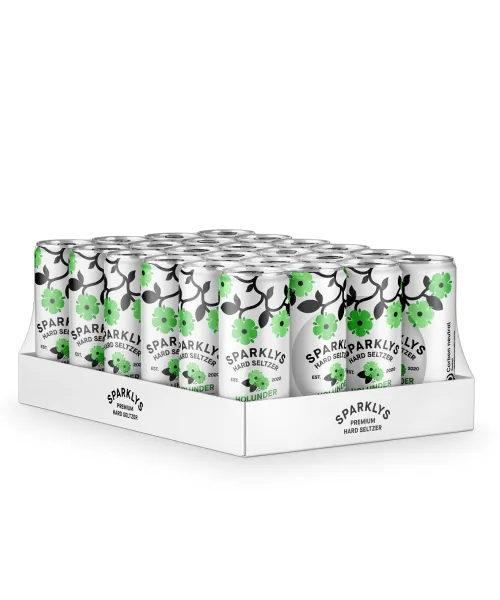
Find out now why Sparklys Hard Seltzer is the perfect addition to your drinks menu and order a few cans of liquid zeitgeist.